

Knowing what to pack for a cruise is less about bringing more and more about bringing the right things in the right bag. Your luggage may arrive at your cabin later than you do. Your days can move from a breezy deck to a warm port and then to dinner without much time to reset. A few thoughtful choices make the first day easier and leave more room in your suitcase for the trip itself.
Use this first-timer cruise packing list as a starting point, then adjust it for your itinerary, ship, season and personal comfort. A Caribbean sailing, an Alaska cruise and a Mediterranean itinerary will not call for exactly the same wardrobe. The goal is a flexible, repeatable plan that keeps you comfortable without turning packing into a puzzle.
Start with the bag you carry on board
Your carry-on should cover the first several hours of your vacation. Keep it with you through check-in rather than sending it away with larger luggage. Pack travel documents, medication, wallet, phone, chargers, sunglasses, sunscreen, a refillable water bottle and one change of clothes. A swimsuit is useful too, especially if you want to enjoy the pool or hot tub before your cabin is ready.
For travelers flying to the port, keep carry-on liquids aligned with the Transportation Security Administration's current rules. Put prescriptions in their original containers and keep a short list of medications nearby. If a checked suitcase is delayed, your first day can still feel relaxed instead of improvised.
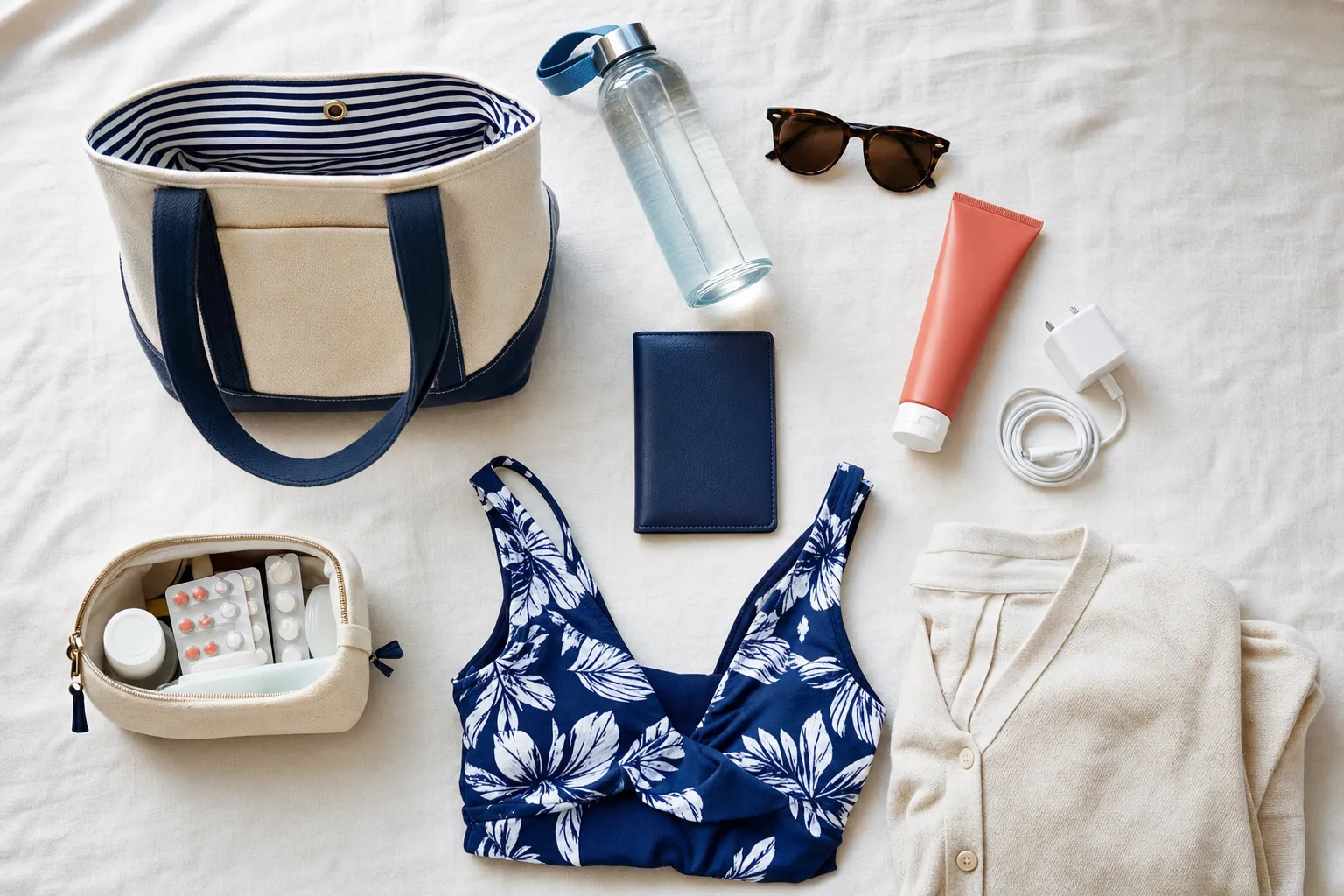
- Passport or required identification, cruise check-in details and payment card
- Medication, glasses and any essential medical devices
- Phone, charger, portable battery and headphones
- Swimsuit, sunscreen, sunglasses and a light layer
- A change of clothes and basic toiletries for the first evening
Pack clothes by moments, not every possible outfit
Cruise days usually have a simple rhythm: breakfast, time on deck or ashore, a chance to freshen up, then dinner and an evening activity. Build around that rhythm. Choose breathable daytime clothes that can mix easily, one or two comfortable walking outfits, swimwear you will actually wear and a few pieces that feel good for dinner. You do not need a new look for every meal.
A light sweater, overshirt or jacket earns its place on almost any sailing. Air-conditioned theaters, early deck time and evenings at sea can feel cooler than expected. Bring shoes you can comfortably walk in for a full port day, plus sandals or casual deck shoes. If your ship has themed evenings or a dining room with a particular dress expectation, check the line's guest information before you pack rather than guessing.
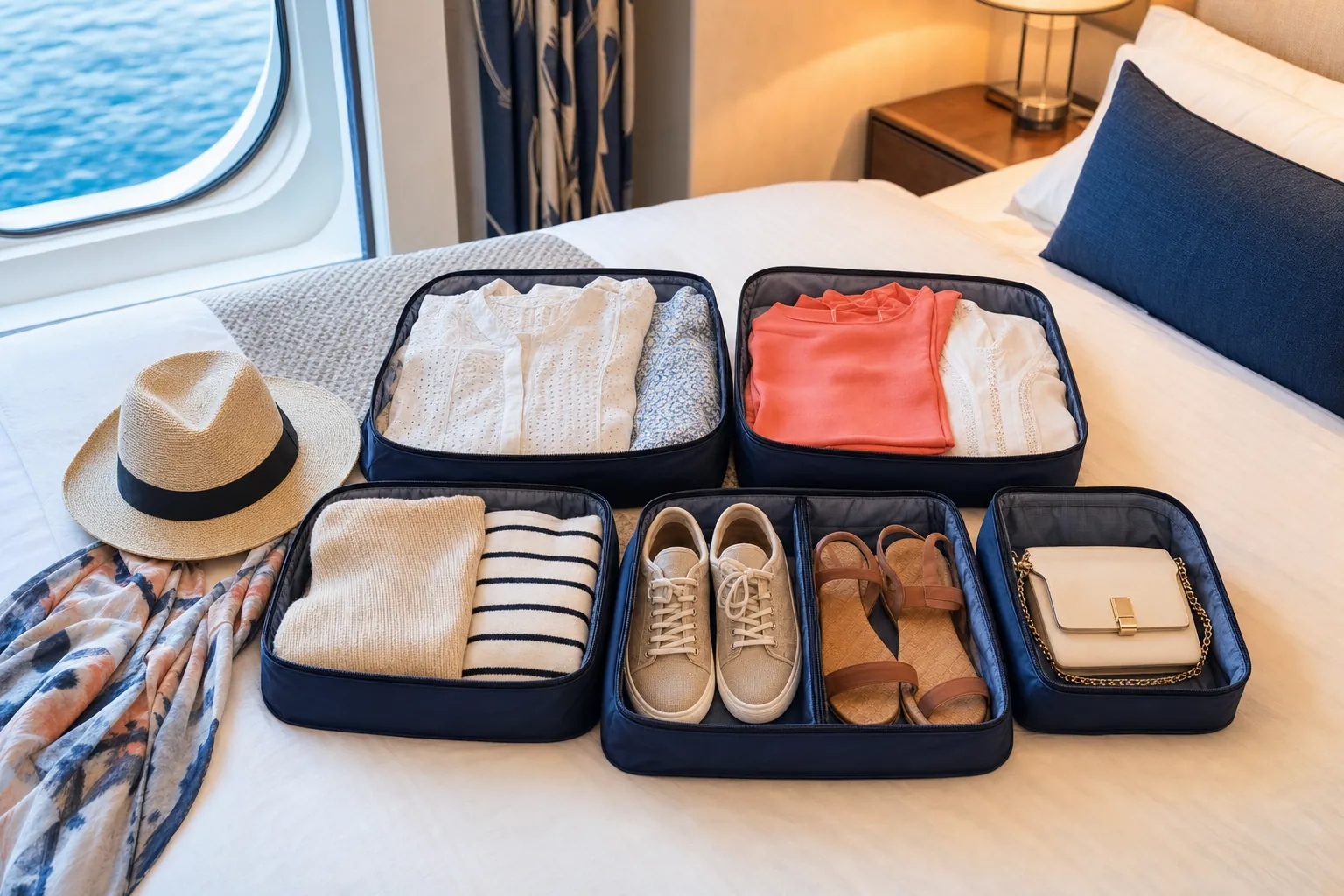
For a seven-night trip, many guests are comfortable with three or four daytime outfits, two swim options, two or three dinner looks and one outfit for a more polished evening. Laundry availability, weather and your own habits matter more than any universal number. The best plan is the one that gives you options without leaving you to wrestle a heavy suitcase.
Make your port-day bag simple and useful
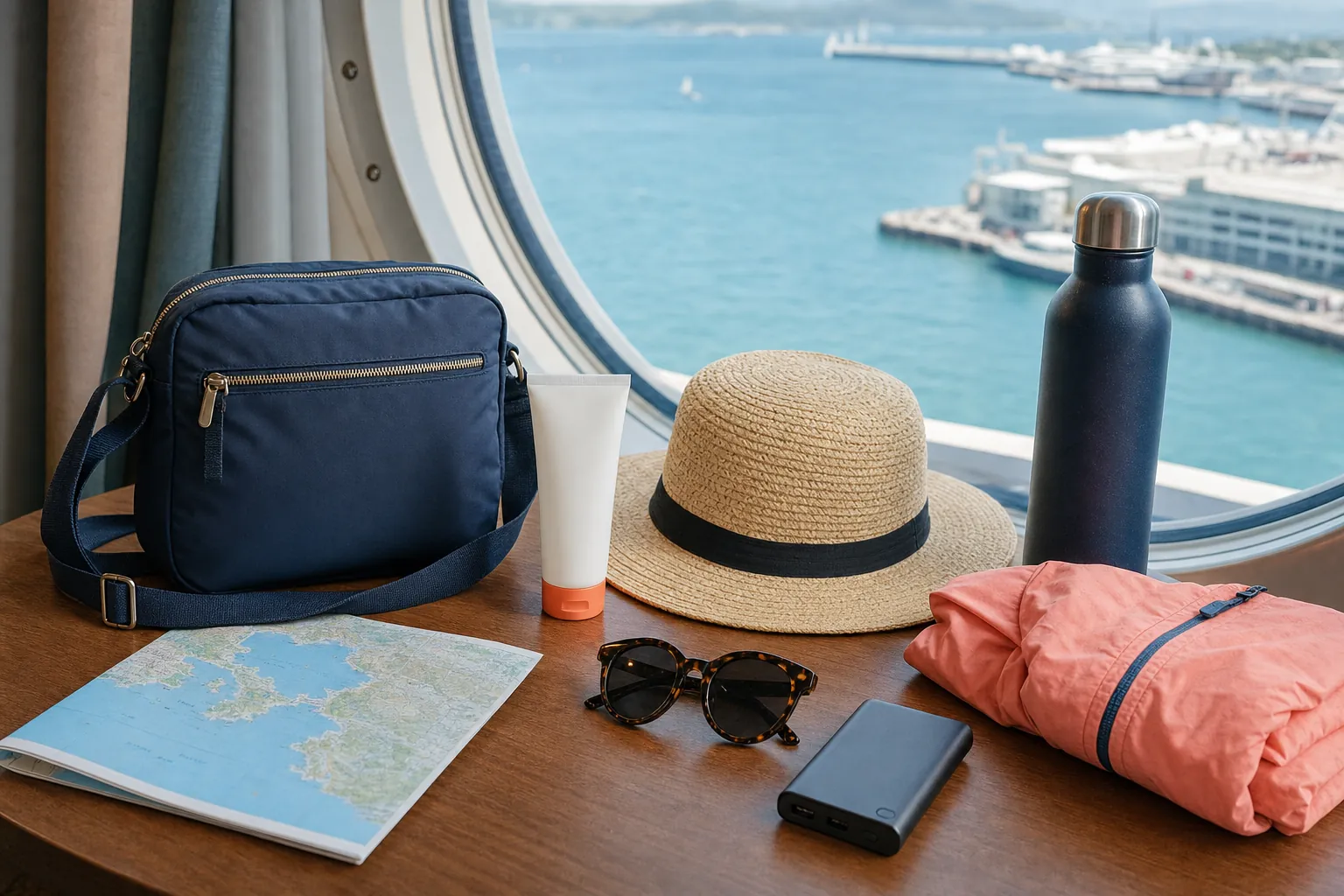
Port days are easier when you can grab one small bag and go. Use a lightweight crossbody or daypack for sunscreen, water, phone power, sunglasses, a light layer and whatever you need for the activity you booked. Add comfortable walking shoes before you leave the ship, not after you see a long pier or uneven historic streets.
Keep room for a local purchase, a towel or an unexpected change in weather. If you are exploring independently, save the ship's return time and port location before you step ashore. Our guide to walkable cruise ports is a helpful next read for travelers who want to make the most of a short day on land without overplanning it.
For international itineraries, check destination-specific health and entry guidance before departure. The Centers for Disease Control and Prevention's cruise travel guidance and the U.S. Department of State's country information pages are useful places to confirm what applies to your specific trip.
Match your packing to the route and the season
It is tempting to picture every cruise as warm pool days and easy evenings. Some are exactly that, but the route matters more than the ship's marketing photos. A Caribbean itinerary can bring strong sun, sudden rain and air-conditioned indoor spaces. An Alaska sailing may include cool mornings, wet excursions and warm afternoons when the sun comes out. Mediterranean port days often mean long walks on stone streets, church visits or time outside without shade.
Start with the weather in the first port and the last port, then look at the activities in between. A beach club, a snorkeling trip, a glacier-viewing day and a city food tour call for different priorities. You do not need specialized gear for every possibility. You do need a light layer, reliable shoes and a plan for the one or two experiences that matter most to you.
For cooler or changeable routes, bring thin layers that can be worn together: a moisture-wicking top, a warm mid-layer and a lightweight waterproof outer layer. This takes less space than one heavy coat and works better when a sunny deck becomes windy or a port day begins with rain. For sunny routes, choose a hat that stays put, sunglasses you will not mind wearing all day and sun protection you can reapply easily.
Keep travel documents separate from your packing list
Documents are not just another item to check off. Put them in a dedicated travel wallet or secure pouch that lives in your carry-on from the moment you leave home. That means your identification, cruise boarding details, health information, travel insurance details and a payment card are together when you need them. Take photos or secure digital copies as a backup, but do not rely on a phone battery alone.
Entry rules depend on the route, citizenship and the way you travel to and from the port. Some sailings have different document rules from others, and a last-minute assumption can create a very expensive problem. Check the official guidance for your exact itinerary early, then confirm the requirement again as your trip gets closer. If children or multiple adults are traveling together, make sure each traveler has the documents that apply to them.
A small paper list is still useful. Write down the ship name, port terminal, boarding time, emergency contact and travel advisor's contact information. Keep it in a place separate from your phone. It is a low-tech backup that can help when a connection is weak, a battery is low or another family member needs the details while you are in transit.
Bring cabin comforts, but skip the clutter
A cruise cabin works best when it stays tidy. A compact toiletry bag, reusable zip bags, a small laundry bag and travel-sized wrinkle-release spray can be more useful than a pile of novelty accessories. If you share a cabin, packing cubes make it easier to give each person a clear drawer or shelf.
Before adding electrical items, read your cruise line's current rules. Safety policies can differ by line and can change. A simple charging plan, such as an approved multi-port USB charger, is usually more useful than several bulky adapters. Keep cords together in one pouch so they do not disappear into the cabin.
Travelers flying to their sailing should also make sure their luggage plan works for the flight, not just the ship. The TSA's medication guidance is worth reviewing before departure if you carry prescriptions or medical supplies.
Use a short checklist for the easy-to-forget items
The things that cause the most frustration are usually small: a charging cable, a hat, a travel-size laundry item, a lanyard for your cruise card, a waterproof pouch for a beach day or the layer you need on a windy deck. Make a final check the night before you leave, then stop adding things. A calm, finished bag is better than an overstuffed one.
- Documents: passport or required identification, cruise documents, travel insurance details and payment cards
- Health: medication, sunscreen, motion-sickness remedies if you use them and a basic first-aid kit
- Technology: phone, charger, portable battery, camera and approved charging accessories
- Pool and beach: swimsuit, cover-up, water shoes if needed, hat and a waterproof pouch
- Comfort: light jacket, sleepwear, comfortable shoes and a small bag for shore days
Leave room for the trip home
Most people remember to pack for departure and forget that the suitcase has to work at the end of the sailing too. Leave some open space for a small souvenir, a damp swimsuit in a sealed bag or the clothing that did not make it into the laundry. A foldable tote can help if you need an extra personal item for the return flight, but avoid relying on an overloaded bag that will be difficult to manage through the airport.
Before you leave the cabin on the final morning, return small items to the same pouch or pocket where they began the trip. Chargers, medication, documents and jewelry are easiest to lose when everyone is tired and trying to clear a room on time. A simple reset keeps the end of the vacation as calm as the beginning.
Let the itinerary decide the final details
Think about where the ship is going, not just the fact that it is a cruise. Warm-weather sailings often call for sun protection and casual layers. Cooler routes may need waterproof outerwear, warm socks and shoes with grip. A trip with formal dining, a private shore excursion or a beach club may have one or two specific needs that are easy to plan for once you know the shape of the itinerary.
This is where an experienced travel advisor can be especially useful. GP Vacations can help you choose the right cruise, compare cabin and itinerary options, and make sure the details are clear before you start packing. Browse current cruise offers or start planning your trip when you are ready.
Frequently asked questions
What should I put in my carry-on for a cruise?
Keep documents, medication, wallet, phone, chargers, sunscreen, swimsuit, a change of clothes and essential toiletries in your carry-on. Larger luggage may take time to reach your cabin.
How many outfits should I bring on a seven-night cruise?
Most travelers do well with mix-and-match daytime clothes, two swim options, two or three dinner outfits and a light layer. Adjust for your itinerary, laundry availability and personal style.
Do I need to bring beach towels on a cruise?
Many cruise lines provide pool towels, but policies vary. Check your cruise documents before packing. A cover-up, sunscreen, hat and waterproof pouch are usually more useful additions.
What should I not pack for a cruise?
Do not assume every travel accessory is allowed. Review your cruise line's current guest policies for restricted electrical equipment and other safety rules before you pack.


