

Your first cruise can feel wonderfully simple from a distance. You choose a ship, pack a suitcase and wait for the sea days to begin. Then the questions start arriving: Which cabin makes sense? How early should you arrive? Will you need a passport? What happens when you get on board? None of those questions are difficult once they are put in the right order.
The best first cruise is not the one with the most activities squeezed into a week. It is the one that matches your travel style, leaves room for a few easy surprises and lets you feel prepared before you reach the terminal. These first-time cruise tips will help you make the important decisions early, then enjoy the rest of the countdown.
Your first-time cruise checklist
Before you book or pack, settle these eight decisions in order. They cover the details that most often create last-minute stress, while leaving plenty of room for the fun part of the trip.
- Choose the pace you want, then compare sailings that fit it.
- Look at the route and port times before falling for a particular ship.
- Confirm the documents required for your exact itinerary.
- Plan your travel to the port with enough time to arrive calmly.
- Choose a cabin based on how you will use it, not only the view.
- Reserve only the experiences that would disappoint you to miss.
- Decide how you want to spend each port day before you step ashore.
- Keep first-day essentials in the bag that stays with you.
Start with the kind of vacation you actually want
Before comparing ships, start with the feeling you want from the trip. Some travelers want slow mornings, a balcony, a book and nowhere they need to be. Others want a new port every day, lively dining rooms and as much time ashore as possible. A family may care most about easy logistics and enough room for everyone to have their own fun. A couple might want a quieter ship, a special dinner and a few unplanned afternoons.
That choice shapes nearly everything else. A short sailing can be a great first taste of cruising, but it moves quickly and often has fewer sea days. A seven-night itinerary gives you more time to settle in and can make a first cruise feel less like a packed weekend. Think about the departure port, flight time, number of sea days, ports and the pace you want before narrowing the options.
It also helps to decide what you would happily pay more for. A direct flight can make embarkation day calmer. A balcony can be worth it for travelers who enjoy a quiet morning outside. A cabin near an elevator may be convenient for some and too busy for others. There is no universal best option, only the best fit for the way you want to spend the week. A personal cruise planning conversation can turn those preferences into a shorter, more useful list of sailings.
Choose an itinerary before getting lost in ship details
It is easy to fall for a beautiful ship and only later look at where it is going. Start the other way around. Ask which ports, weather and travel days sound appealing, then compare the ships that sail those routes. A warm-weather itinerary may be ideal when you want beach time and easy outdoor days. A cooler route may be perfect when scenic sailing, wildlife or cities are the main event.
Look closely at the port schedule, not just the port names. A ship can visit an exciting destination for a short morning or give you a full day to explore. Check arrival and departure times, whether the port requires a tender boat, and how far the pier is from the places you hope to see. Travelers who enjoy independent wandering can get ideas from this guide to walkable cruise ports, while those who want an excursion may prefer a port with a clear, well-timed option.
Do not treat sea days as empty space. They are the days that let you learn the ship, try the pool, book a meal, see a show or simply do less. If the idea of staying busy from breakfast to bedtime sounds tiring, avoid an itinerary that turns every day into a race from the pier back to the ship. A little room to breathe is part of what makes cruising feel like a vacation.

Handle documents and health planning early
Do not leave documentation until the week before you sail. The documents you need can depend on your itinerary, citizenship, how you arrive at the port and whether you are flying home from another country. Confirm the requirements for your exact sailing with the cruise line and review the U.S. Department of State's destination information for every country on your itinerary. If children are traveling, the U.S. government's guidance for child travel documents is a useful early check.
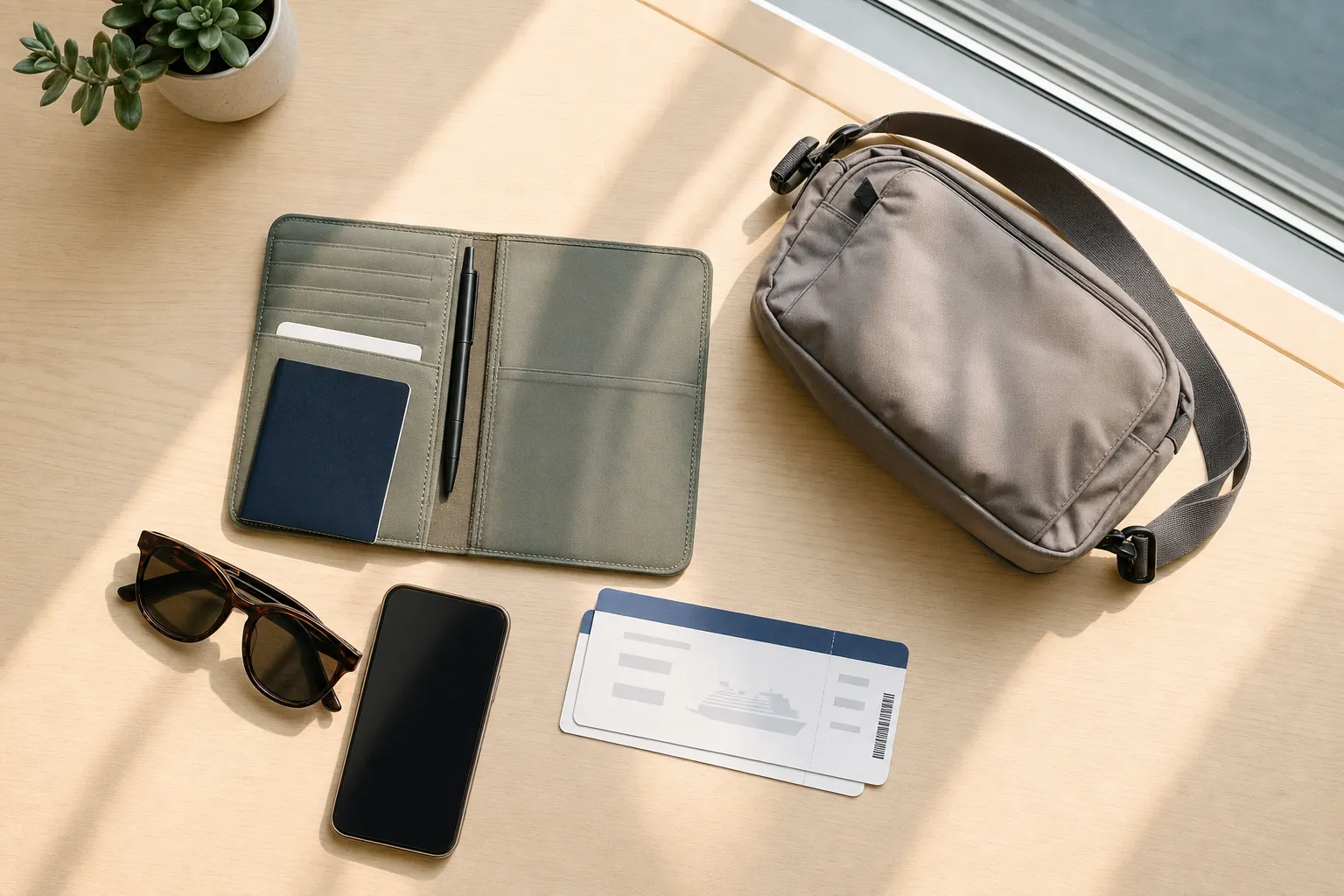
Keep your passport or identification, cruise documents, payment card, travel insurance details and medication information together in a small travel wallet that stays in your carry-on. Make secure digital copies as a backup, but do not rely on your phone alone. A low battery or unreliable connection should not stand between you and the information you need at check-in.
Health preparation is personal, but it should not be an afterthought. If you use prescription medication, keep enough for the trip in original containers in your carry-on. Travelers who have destination-specific health questions can review the CDC's destination guidance and speak with a qualified health professional when needed. A small plan for hydration, sunscreen, motion sensitivity and time in the sun can make the first few days much more comfortable.
Make embarkation day easier on yourself
Embarkation day is exciting, but it also involves lines, bags, security and a lot of people trying to begin their vacation at once. Plan to arrive in the time window assigned by your cruise line, with every traveler ready to show the required documents. Wear comfortable clothes and shoes, keep essentials close and assume that your larger suitcase may not reach your cabin immediately.
Your carry-on should make the first afternoon work without your checked luggage. Include medication, documents, phone charger, sunglasses, sunscreen, a refillable water bottle, a swimsuit and one change of clothes. The TSA's current guidance can help travelers flying to the port check what belongs in carry-on baggage. A small amount of planning here removes the most common first-day frustration.
Once you board, do three things before chasing the buffet or your first pool chair: confirm your safety briefing, locate your muster station and make sure everyone in your group knows the cabin number. Then take a gentle walk around the ship. Find the main dining room, the pool deck, the guest services desk and the place you are most likely to want coffee in the morning. The ship feels much smaller after one relaxed lap.
Choose a cabin for how you will use it
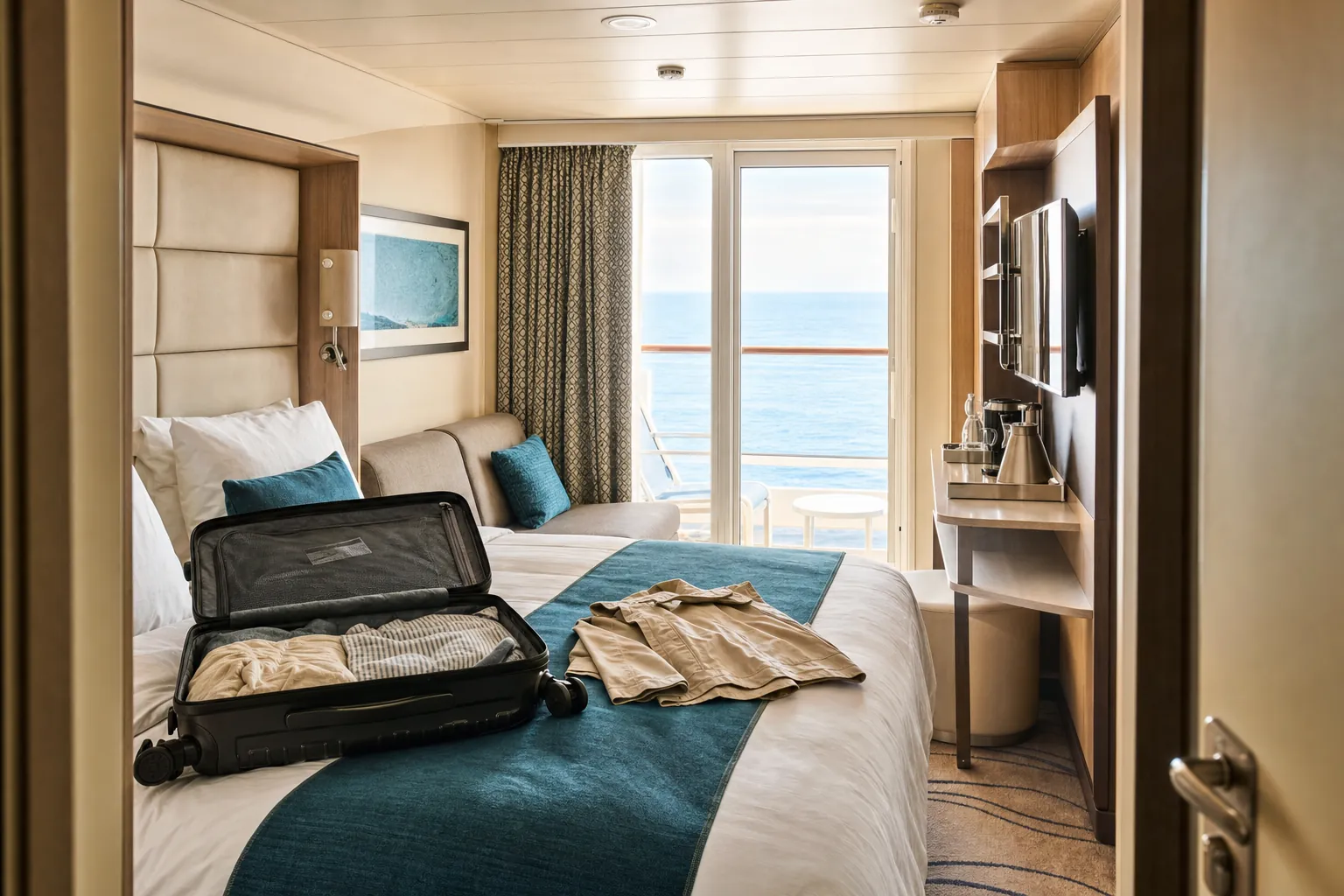
A cabin is not just a place to sleep. It is where you reset between port days, store the things you do not want to carry and sometimes enjoy the quietest part of the whole ship. Inside cabins can be an excellent value for travelers who expect to be out exploring most of the day. Ocean-view cabins bring in daylight. Balcony cabins suit travelers who like private coffee, sea air or an easy escape from busy public spaces.
Location matters as much as category. A cabin near the center of the ship can feel steadier for travelers who are worried about motion, while cabins beneath a nightclub, pool deck or theater can bring more noise than expected. If you need an accessible room, are traveling with children or want connecting cabins, book early enough to have meaningful choices. The question is not whether one cabin type is objectively better. It is whether it supports the pace and comfort you want.
Plan only the things that are hard to replace
First-time cruisers often make one of two mistakes: planning every hour or planning nothing at all. A better approach is to reserve the few experiences that matter most and leave the rest open. If there is a specialty dinner, spa appointment, excursion or show you truly care about, check whether reservations open before sailing and secure it early. Then let the ship surprise you a little.
Keep an eye on what is included and what costs extra. Many sailings include a wide choice of dining, entertainment and daily activities, while drinks, specialty restaurants, spa services, internet and some excursions are separate. Reading the cruise line's details before you sail helps you choose where to spend instead of making rushed decisions on board. It also makes it easier to compare current cruise offers on the details that will matter to your trip.
Do not forget the practical side. Put your phone in airplane mode if you do not want international roaming charges, then connect through the ship's plan or port Wi-Fi when it makes sense. Confirm dining times, take a photo of the daily schedule and choose one meeting place if your group tends to split up. These are small habits, but they keep a day from becoming a search party.
Let port days have a simple shape
A port day works best when you know your first decision before you leave the ship: guided excursion, independent walk, beach day or a quieter ship day. Research your route in advance, including where the pier is, how long it takes to return from the main attraction and what the ship's all-aboard time is. The ship will not wait because a lunch ran long or traffic changed.
Bring only what you need: ship card, identification if required, payment method, water, sun protection and a small bag that stays easy to manage. Keep valuables discreet and give yourself more return time than you think you need. If you are doing an independent outing, use the time shown by the ship as your reference rather than assuming local time is the same.
It is also completely reasonable to skip a port. A quiet pool day while many guests are ashore can be one of the most restful parts of the trip. The goal is not to collect every possible activity. The goal is to come home feeling like you had the vacation you wanted.
Pack for the first day and then pack less than you think
Most cruise packing problems come from trying to cover every imaginable moment. Start with mix-and-match outfits, comfortable walking shoes, swimwear, a light layer and any clothing your itinerary specifically calls for. Add a small laundry plan rather than filling a suitcase with duplicate outfits. Your cabin will feel much better when there is room to move around.
For a more detailed starting point, use GP Vacations' first-time cruise packing list. It covers the carry-on items that make embarkation easier, clothing that works across the ship and shore days, and the small essentials people tend to forget. Check your cruise line's current rules before bringing electrical accessories or other items that may be restricted.
Bring the questions, and let GP Vacations sort the choices
A first cruise should feel exciting, not like a test you have to study for. GP Vacations can help you compare itinerary options, cabin types, travel days and the little details that make a sailing fit the people you are bringing. You do not need a fully formed plan to start. Dates, a rough budget, the travelers and the kind of time away you are hoping for are enough to begin.
When you are ready, tell us what you are picturing. We will help turn the unfamiliar parts of a first cruise into choices that feel clear before you board.
Frequently asked questions
What should a first-time cruiser do first after boarding?
Complete the required safety steps, find your muster station, confirm your cabin number and take a relaxed walk around the ship. Your larger luggage may arrive later, so keep first-day essentials in your carry-on.
How early should I plan my first cruise?
Start as soon as you have a likely travel window. Planning early gives you more cabin and itinerary choices, and it leaves time to confirm documents, flights and any special arrangements without rushing.
Do I need a balcony for my first cruise?
No. A balcony can be lovely for travelers who enjoy quiet private time outside, but an inside or ocean-view cabin can be a strong fit when you expect to spend most of the day around the ship and in port.
Should I book cruise excursions before I sail?
Reserve the excursions that would disappoint you to miss, particularly popular or limited-capacity options. For everything else, leave some room for the pace you discover once you are on board.


